
Last updated November 15, 2026
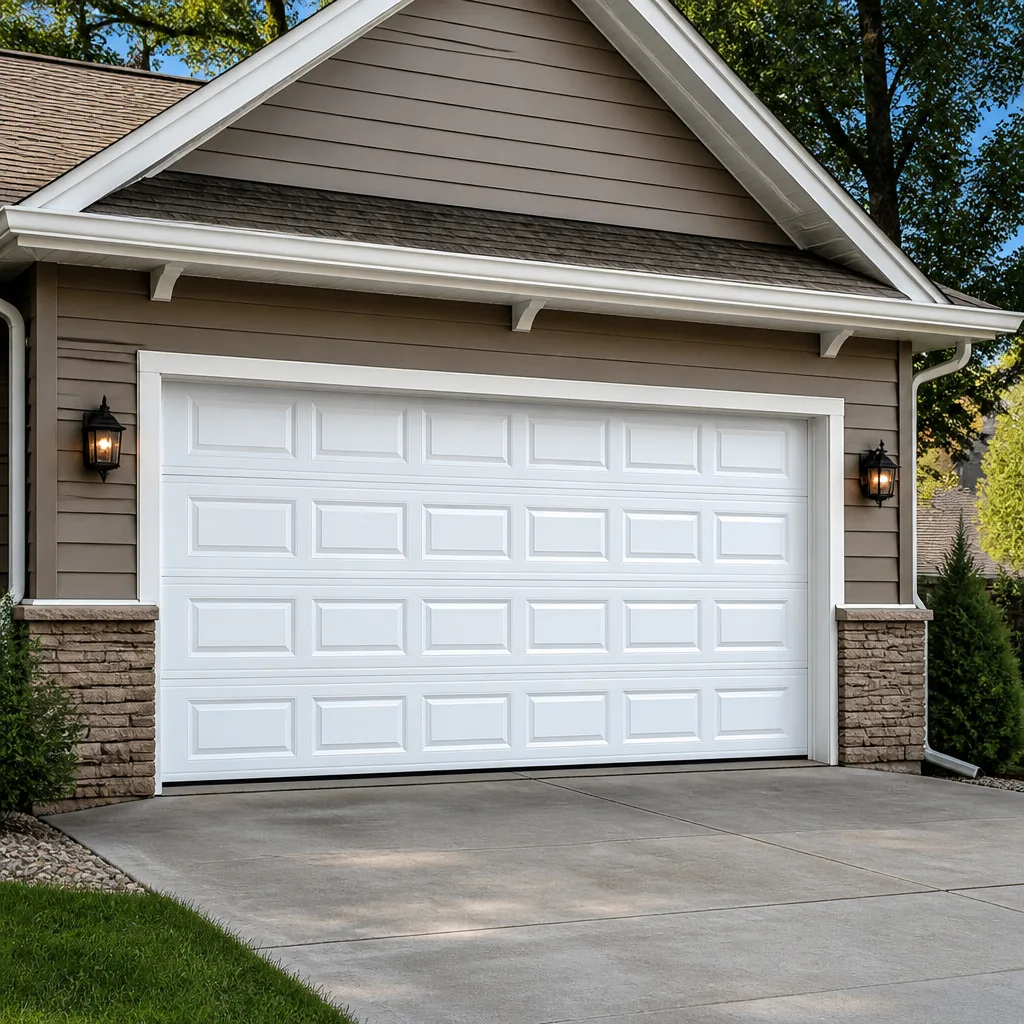 Raised-panel steel
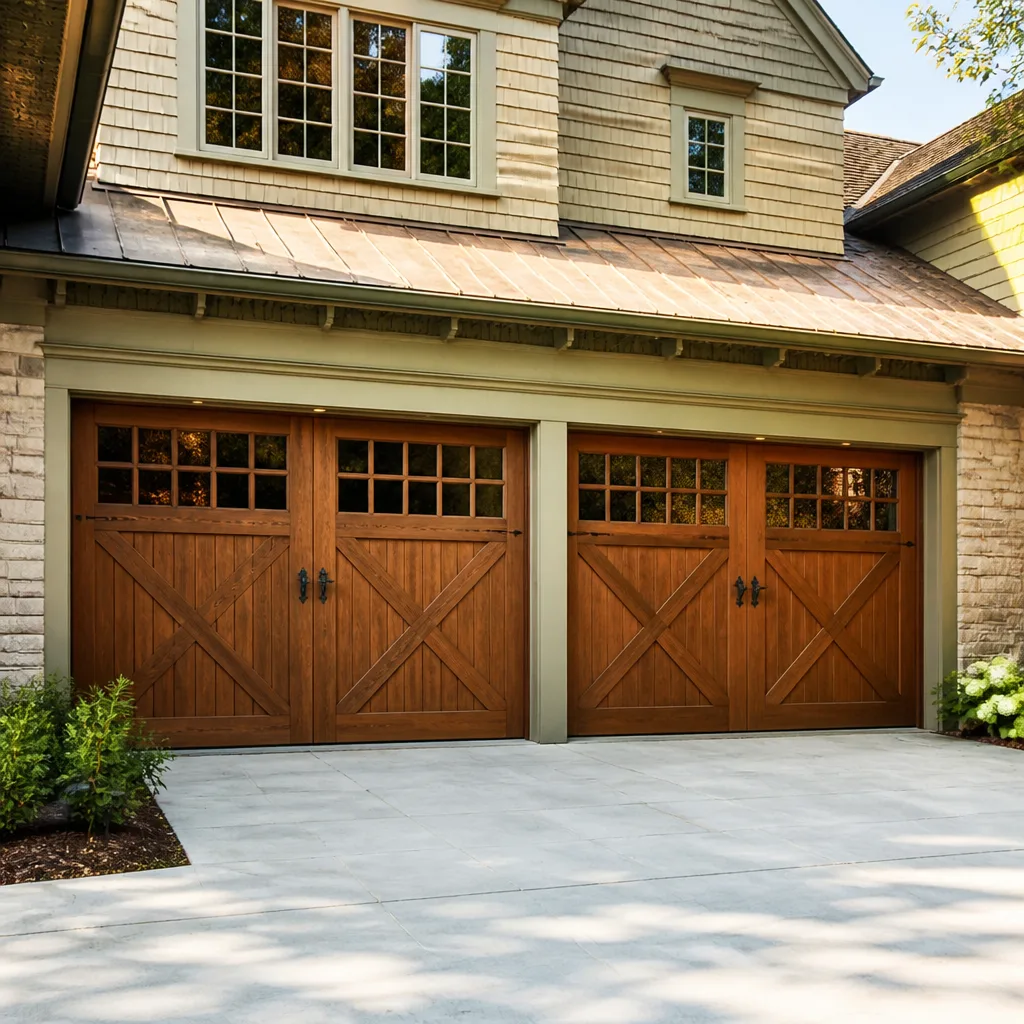 Carriage house
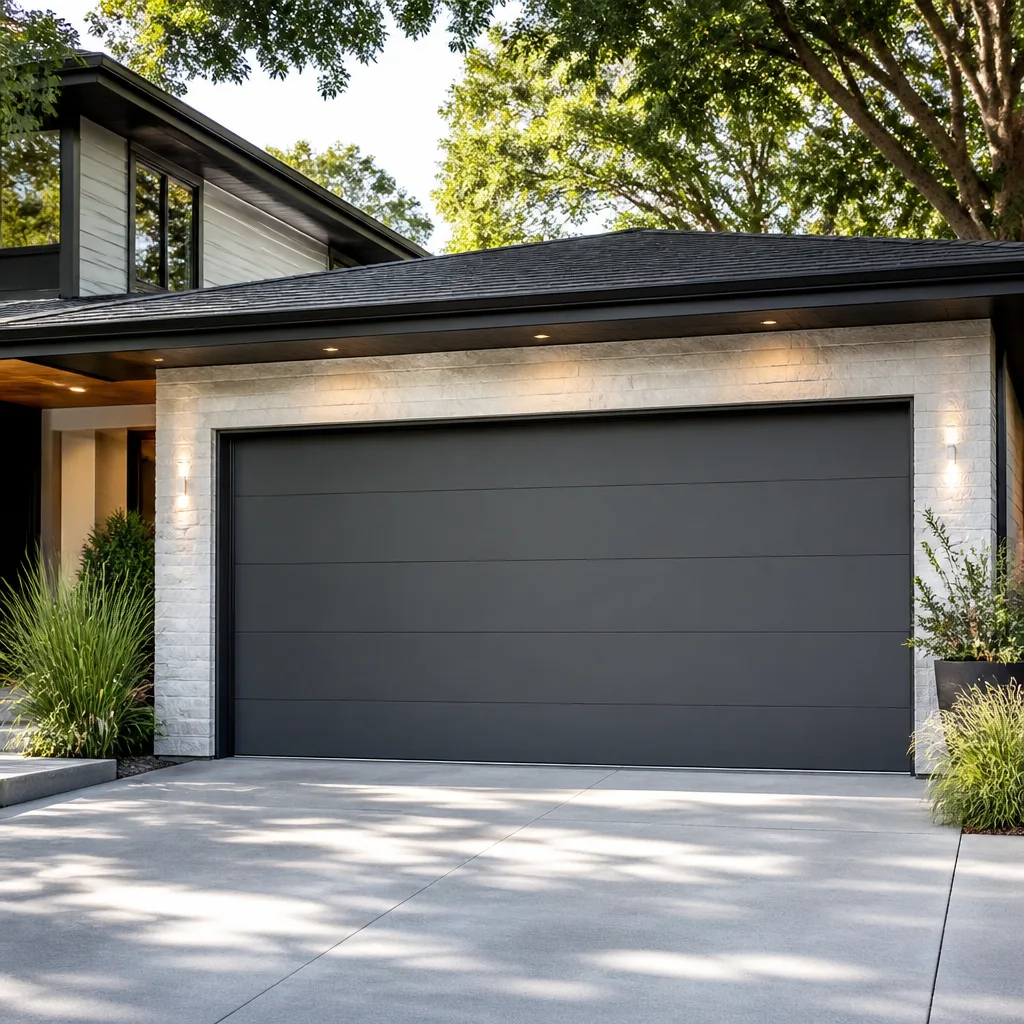 Modern flush
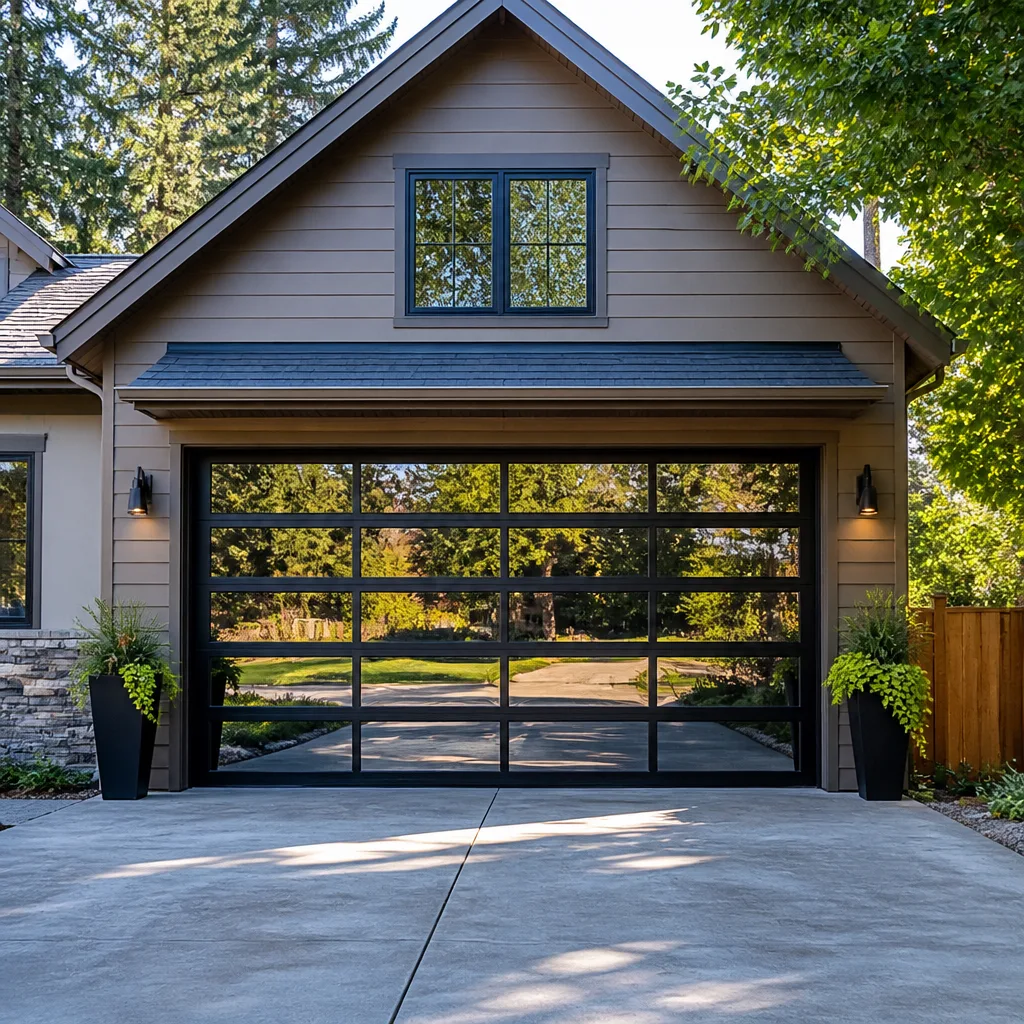 Full-view glass
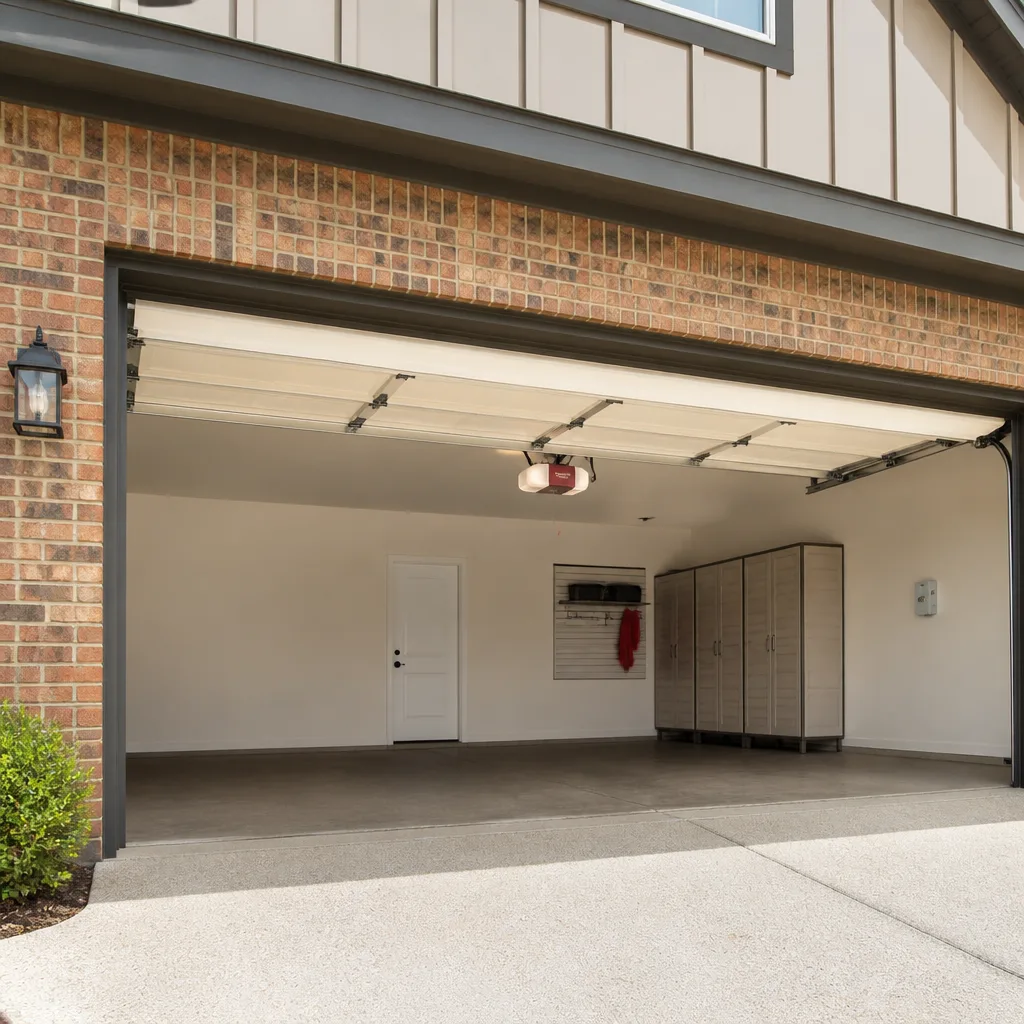 LiftMaster openers
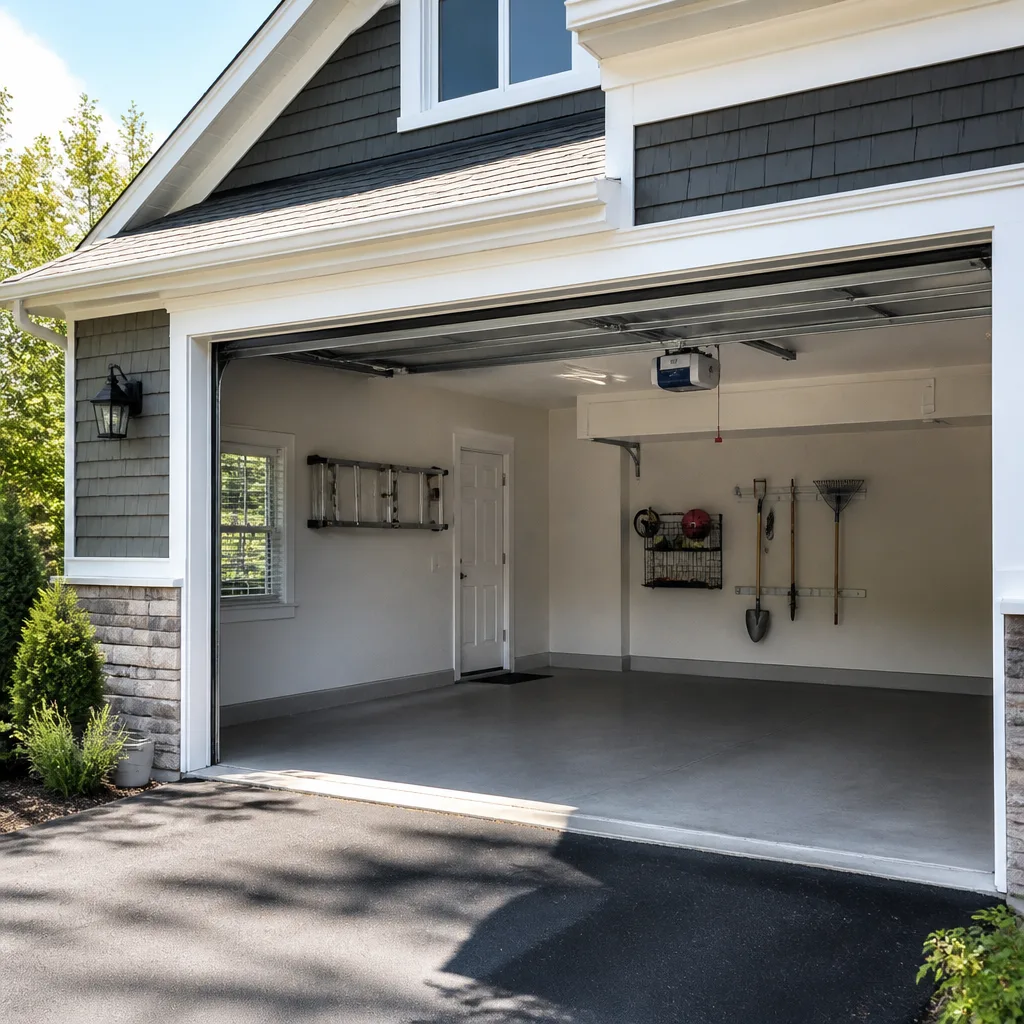 Chamberlain openers
Full 25-point door and opener safety check with every visit - springs, cables, rollers, tracks, and your LiftMaster or Chamberlain opener included
You get a price before we start. It does not change when the pro arrives.
Get your free estimateGarage Door Warning Signs: A Concord Homeowner’s Reference Guide
A torsion spring doesn’t snap out of nowhere. It telegraphs failure for days or weeks: a specific grinding sound in the last few inches of travel, a door that lifts slightly crooked, a visible gap opening in the coil. Most homeowners hear that noise and blame the opener. They replace a perfectly good motor and discover the spring was failing all along. That misdiagnosis is the single most common and most expensive mistake we see in Concord garages. This guide decodes what each component of your door is telling you before it fails, by part rather than by symptom, so you can act on a small repair instead of an emergency call at 7 AM.
Quick Answer
Garage doors almost never fail without warning. The reliable early signals are grinding or snapping sounds, uneven lift, a door that sags, visible gaps in spring coils, frayed cables, worn rollers, and a door that closes and reopens on its own. The two warning signs that mean stop using the door immediately are a frayed or kinked cable and a gap in a torsion spring coil, because either can cause the door to fall. Everything else usually gives you a week or more to schedule service.
Styles & brands we work with
- Raised-panel steel
- Carriage house
- Modern flush
- Full-view glass
- LiftMaster openers
- Chamberlain openers
Table of Contents
- Component-by-Component Warning Signs
- Opener Problem or Mechanical Problem? How to Tell Them Apart
- Two Tests You Can Run Yourself: Balance and Reversal
- High-Cycle Doors in Attached Garages: Why They Wear Differently
- Urgency Triage: Schedule This Week vs. Stop Using the Door
- What Concord Weather Does to Your Door
- Repair, Adjust, or Replace? How to Decide
- Why Brand Fluency Changes the Diagnosis
Component-by-Component Warning Signs
A garage door is a system, and each part in that system fails in its own particular way. Learning to read each component separately is how you catch trouble early. Here’s what to watch for on the parts that matter most in a Concord home.
Springs
- Sound: A snapping or grinding noise during the last few inches of travel, when tension is highest. It often sounds like it’s coming from the opener, but it’s the spring.
- Sight: A visible gap in the coil, a spring that looks stretched or spaced differently than the others, or rust gathering at a coil.
- Feel: The door feels unusually heavy when you lift it by hand, or the opener strains to raise it.
Cables
- Fraying or kinks: A cable that looks furry, flattened, or has loose strands is close to failing.
- Sagging: Cables should run straight and taut along the sides. Slacking means tension is off.
- Rubbing: A metallic scraping near the drums is the cable dragging where it shouldn’t.
Rollers
- Noise: A rhythmic squeak or rattle that speeds up with the door’s movement.
- Wobble: Steel rollers wear flat and nylon rollers crack. Either way the door sways slightly in the track.
- Grinding: A dragging sound means a roller has seized and is sliding rather than rolling.
Tracks
- Bends: A dented track catches rollers and makes the door jerk.
- Widening: The gap between track and roller should stay uniform. If it widens, the door can leave the track.
- Loose hardware: Rattling brackets mean bolts are working loose.
Panels
- Cracks: Hairline cracks in wood or composite panels spread with seasonal swelling.
- Dents: A bent panel can bind in the track.
- Separation: Gaps at the hinges or between sections mean the door is losing structural integrity.
Opener Motor
- Stalling: The motor runs but the door doesn’t move, or moves a few inches and stops.
- Straining: A loud, labored hum that sounds like it’s fighting the door.
- Inconsistent limits: The door stops at different points each time.
Safety Sensors
- False reverses: The door starts down, then goes back up with nothing in the way.
- Blinking lights: A sensor LED flashing rather than steady means the beam is misaligned or blocked.
- No reverse: The door closes on an object and keeps going. This is the most serious sign, and the door should not be used until it’s checked.
Opener Problem or Mechanical Problem? How to Tell Them Apart
The most common reason homeowners overpay is replacing an opener that was fine while the real issue sat in the door itself. The tell is simple: a failing opener usually runs, hums, or makes electrical trouble of some kind, while a failing door runs fine but fights the opener. Read the symptom before you blame the motor.
When a technician arrives for garage door opener repair and finds the motor healthy, the door usually has one of these mechanical problems:
- Weak or broken spring: The opener is lifting a door that’s suddenly twice as heavy. It looks like a motor problem but the motor is working correctly against too much load.
- Seized roller or bent track: The door drags, so the opener strains and eventually stalls.
- Off-balance door: If the door won’t stay put at halfway, the springs are tired and the opener is doing work it wasn’t meant to.
Opener-specific warning signs look different. A LiftMaster or Genie unit that flashes a diagnostic code, clicks but doesn’t engage, loses its travel limits, or pairs and unpairs from its remote is a motor or logic-board problem. Those are the symptoms that actually belong to the opener. If the door is stiff or crooked but the unit runs, it’s mechanical. Getting that call right the first time is the difference between a small repair and an unnecessary replacement.
The safety caveat here matters. Never reach into the rail, the trolley, or the spring assembly while the door is powered. Springs and cables hold enormous stored tension, and a mistake can cause serious injury. Your job is to observe and test, not to repair.
Two Tests You Can Run Yourself: Balance and Reversal
Two simple tests tell you whether your door is healthy or starting to slip. Run them once a season and after any change in the door’s sound or feel. Both are observation only. Neither requires you to touch the springs, cables, or opener mechanism.
The Balance Test
- Close the door and disconnect the opener using the manual release cord, so the door is on its own.
- Lift the door by hand to about halfway and let go gently. A balanced door stays put or drifts only slightly.
- If the door slams down or swings up on its own, the springs are tired or out of adjustment. Expect to schedule a spring check soon.
- Reconnect the opener and run the door through a full cycle to confirm it’s back on track.
The Reversal Test
- Stand clear and run the door down toward a small object placed flat in the middle of the opening.
- Watch whether the door reverses when it meets the object. It should reverse on contact.
- If it doesn’t reverse, the safety system has failed. Stop using the door and call a technician. A door that will close on an object can close on a person.
These two tests catch the majority of developing problems before they become breakdowns. If your balance test keeps failing after an adjustment, the door typically needs a closer look from a specialist.
High-Cycle Doors in Attached Garages: Why They Wear Differently
Not every door wears at the same rate. A door used as the main family entry, opening and closing eight to ten times a day, cycles thousands of times a year. A door on a detached garage used twice a week sees a fraction of that. The high-cycle door needs earlier inspection, and in a Concord neighborhood where the garage doubles as the everyday front door, it’s the one most likely to give out first.
High-cycle wear shows up in specific places:
- Springs first. Springs have a finite cycle life. A door cycling ten times daily reaches that limit far sooner than a low-use door, and the spring is the part that carries the whole load. Listen for the warning snap during the last few inches of travel.
- Rollers wear faster. More cycles means more rolling friction, so nylon rollers crack and steel rollers flatten sooner.
- Hinges and fasteners loosen. Constant vibration works bolts loose long before a low-use door would show it.
- Openers log more run time. A smart opener on a high-cycle door tells you a lot, because its own cycle count and diagnostics flag strain early. That’s one reason we take a particular interest in opener brands like LiftMaster, where the unit reports the story of its own wear.
The practical takeaway: if your garage is the main entrance, inspect it more often than you’d inspect a low-use door. A quarterly sound check and an annual balance test catch high-cycle wear while it’s still a scheduled repair.
Urgency Triage: Schedule This Week vs. Stop Using the Door
Not every warning sign is an emergency, but a few are. Sorting them correctly keeps you from panicking over a squeak and, more importantly, from ignoring a real safety risk. Here’s how we triage what we see in Concord garages.
Stop using the door until it’s fixed
- Frayed or snapped cable. A cable under load that’s lost strands can whip and cause serious injury. Don’t operate the door until a technician has replaced it.
- Gap in a torsion spring coil. That gap means the spring has lost tension or broken, and the door can drop. This is a genuine danger, and we recommend a trained professional handles it. Never try to adjust a spring yourself.
- Door that falls, or won’t stay up, or reverses unpredictably on objects. Stop using it and call.
- Door off the track or hanging crooked. Operating it can bend panels and worsen the damage.
Schedule this week
- Grinding or popping in the last few inches of travel. Often a spring starting to go, and worth a look before it fails.
- Uneven lift or a door that sags on one side. Likely tired springs or a worn cable end.
- Opener stalling or straining. Could mean the door is getting heavy, and that needs diagnosing.
- Worn rollers, rattling tracks, or loose hardware. Small fixes that prevent bigger ones.
Watch and monitor
- A single squeak, an occasional rattle, one slow sensor. Lubricate, test the balance and reversal, and recheck in a month.
Call us at (866) 942-7643 if you’re unsure which bucket you’re in. We answer 24/7, and a description over the phone often sorts a squeak from a safety issue before anyone drives out. The written estimate sets the price before any work begins, so there’s no guesswork on cost either.
What Concord Weather Does to Your Door
Concord’s climate works on a garage door in a specific way. Warm, humid summers swell wood and composite panels, which can be enough to make a tight-fitting door bind in its track. Winter cold contracts metal, and the expansion and contraction across the seasons loosens fasteners and stresses springs. The freeze-and-thaw pattern that hits the Piedmont means doors here see seasonal movement that a milder or drier climate doesn’t impose.
What that means in practice for a Concord home:
- Spring and fall are inspection season. Check the balance and reversal tests as the seasons change, because that’s when panel swelling and metal contraction are most likely to show up.
- Humidity is a real factor. Keep an eye on wood panels for cracks and swelling. A small crack at a hinge spreads as moisture gets in.
- Hardware loosens with the temperature swings. A rattle that appears each spring is often seasonal and easily tightened.
- Rain and drainage matter. A garage floor that stays wet at the threshold wears the bottom seal and accelerates rust on the bottom panel and hinges.
Reading those signals by component is how a Concord homeowner stays ahead of them. The door is telling you what season it is by what it does.
Repair, Adjust, or Replace? How to Decide
Warning signs don’t always mean a big job. Most of what we’re called out to in Concord is a targeted repair: a spring, a cable, a set of rollers, a safety sensor, or an opener board. But when several warning signs line up at once, the honest answer is sometimes that the door is at the end of its life and a replacement makes more sense than repeated repairs. Here’s how to think about it.
- One warning sign on a sound door: repair it. A spring or a set of rollers is a straightforward fix.
- Several warnings together on an aging door: springs, panels, and opener all showing strain. That’s a conversation about replacement versus repair, and both should be on the table.
- A door that’s been “fixed” repeatedly for the same issue: the underlying cause hasn’t been found. Get a proper diagnosis before you spend again.
- Cosmetic warnings on a young door: a small dent, a worn seal. A repair, not a replacement.
When a door is ready for replacement, the Harbinger Garage Door Repair team handles installation alongside repair under the same company name, so you don’t have to start over with a new provider when the door reaches the end of its life. The full lifecycle stays with one specialist. A full installation is measured, ordered, and scheduled rather than done same-day, so plan on a written measure and price rather than an immediate fit.
Why Brand Fluency Changes the Diagnosis
Half the reason warning signs get misread is that the technician on the job doesn’t already know the system in your garage. A Wayne Dalton door has its own hinge and panel behavior. A Raynor has its own track geometry. A Craftsman opener reports diagnostic codes its own way. A technician who has to figure that out on your driveway spends your time and money learning.
We take a different approach: we specialize in eight of the most widely installed brands in North America, so we arrive already familiar with the system rather than meeting it for the first time. When we walk up to a LiftMaster opener whose light is flashing a code, or a door with a Wayne Dalton hinge pattern we know, we diagnose it correctly the first time. Your brand’s door is our daily work. That familiarity is how a warning sign gets read as what it is instead of guessed at.
We also keep a tight focus on one trade. No plumbing, no HVAC, no diluted attention, which means every bit of training and parts knowledge goes into garage doors and openers. The name Harbinger fits that posture: we’re here to catch the small signal before it becomes the costly failure.
Common Mistakes to Avoid
- Blaming the opener for a mechanical problem. Most “dead opener” calls we see in Concord end with a healthy motor and a failing spring. Test the door by hand before you replace the opener.
- Ignoring the safety reversal test. It’s the one test that protects people, not the door. If the door won’t reverse on an object, stop using it.
- Using WD-40 on tracks and springs. It attracts grit and won’t do the job. Tracks should be clean and dry; springs and hinges take garage-door lubricant.
- Cutting the tension on a torsion spring yourself. This is the most dangerous part of the door, and a spring gap or a broken spring is a call-a-professional job, not a weekend project.
- Putting off a frayed cable. A cable with loose strands can whip under load. It’s a stop-using-the-door signal in this climate and any other.
- Treating a high-cycle door like a low-use one. A door that opens ten times a day in a busy Concord household needs a seasonal check, not a yearly one.
- Replacing a door when a repair would do. Several warning signs together can mean replacement, but one worn part rarely does. Get a diagnosis before you spend on a new door.
See the difference
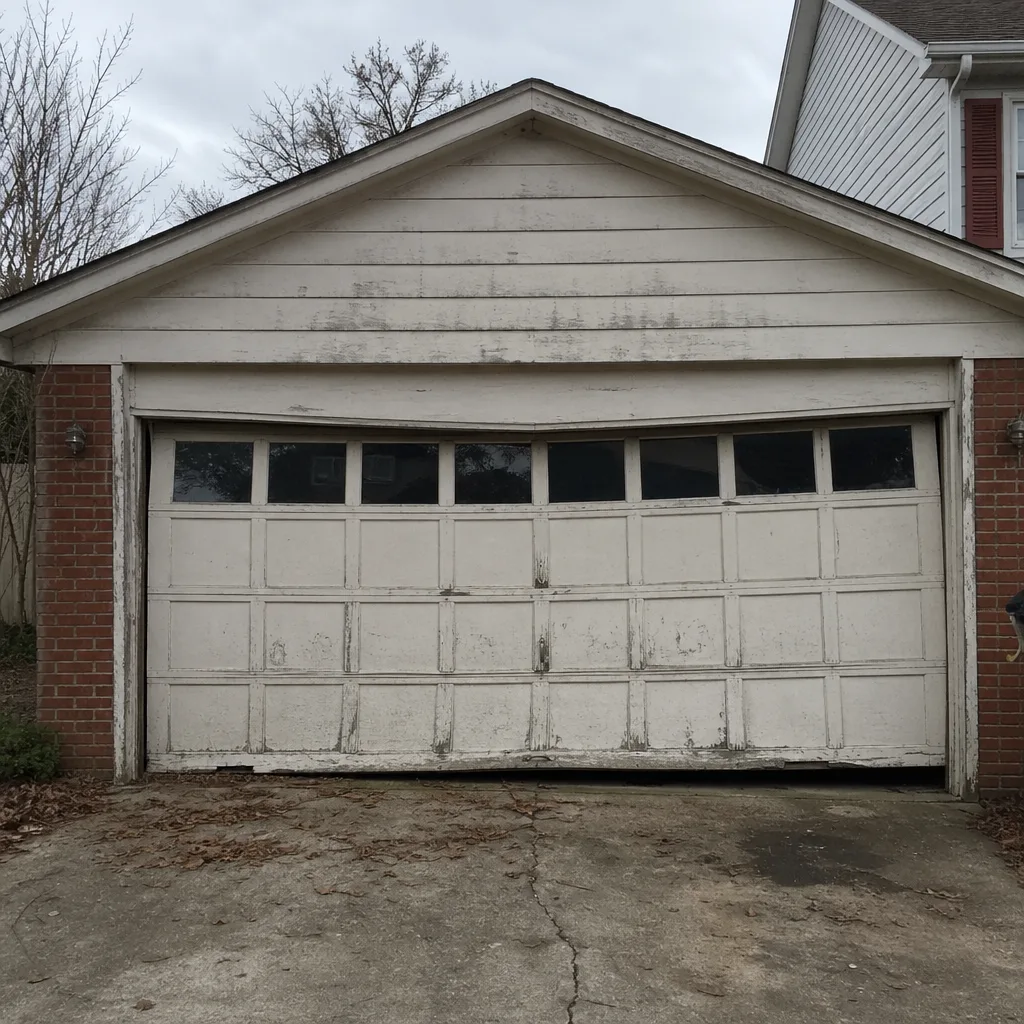 Before
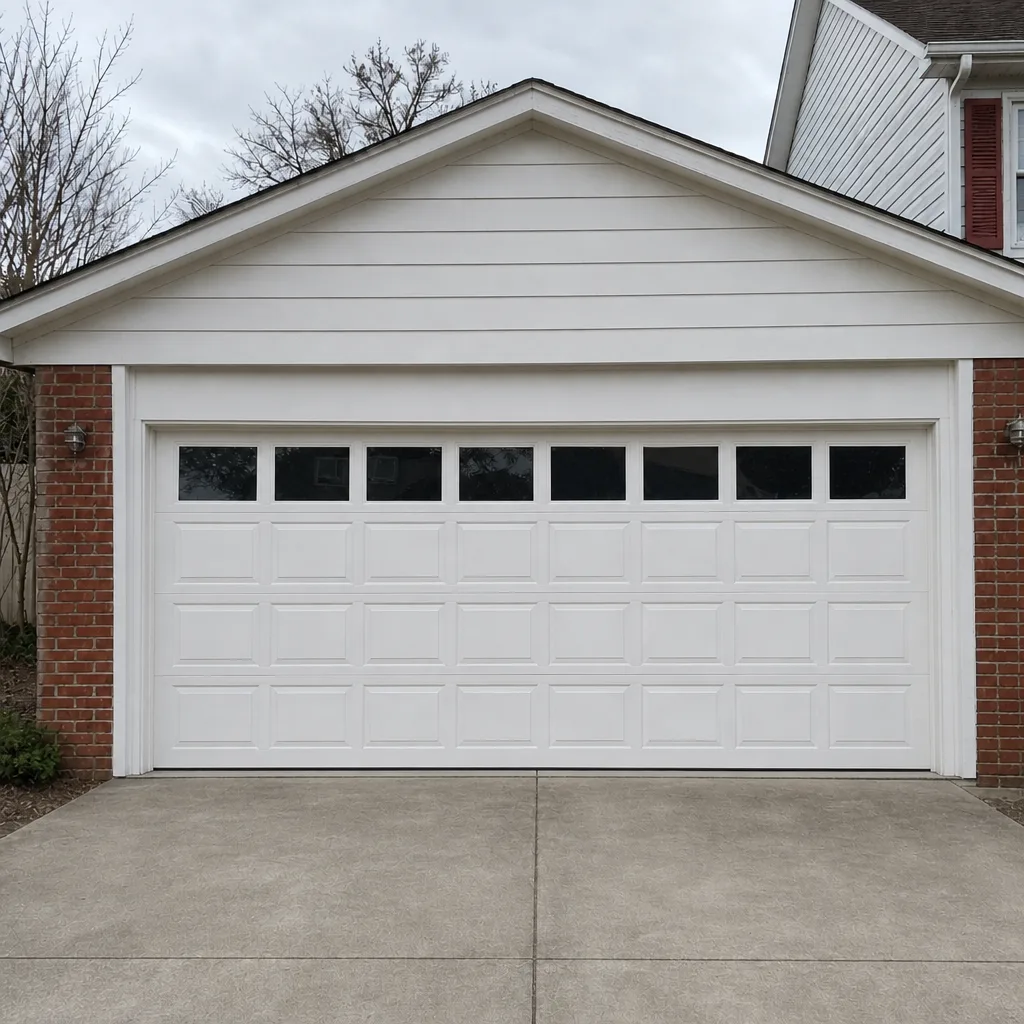 After
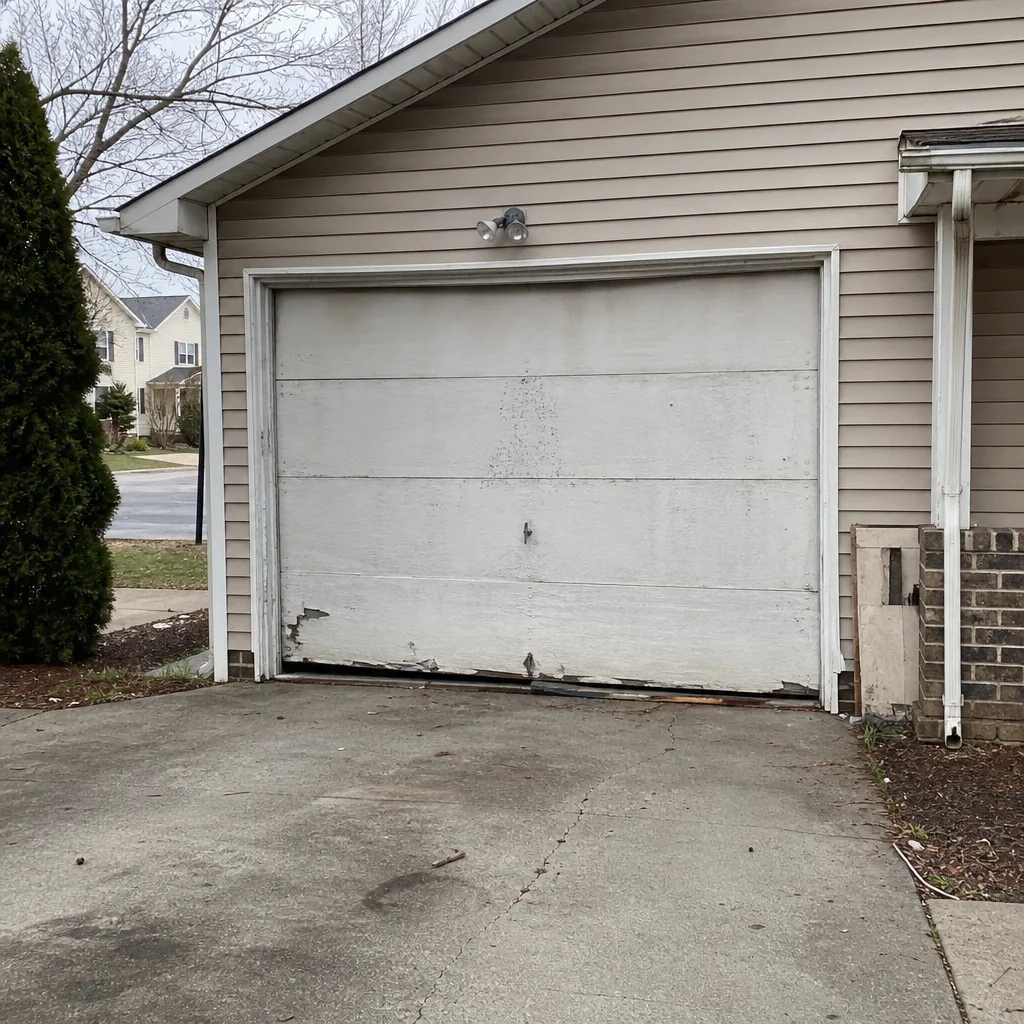 Before
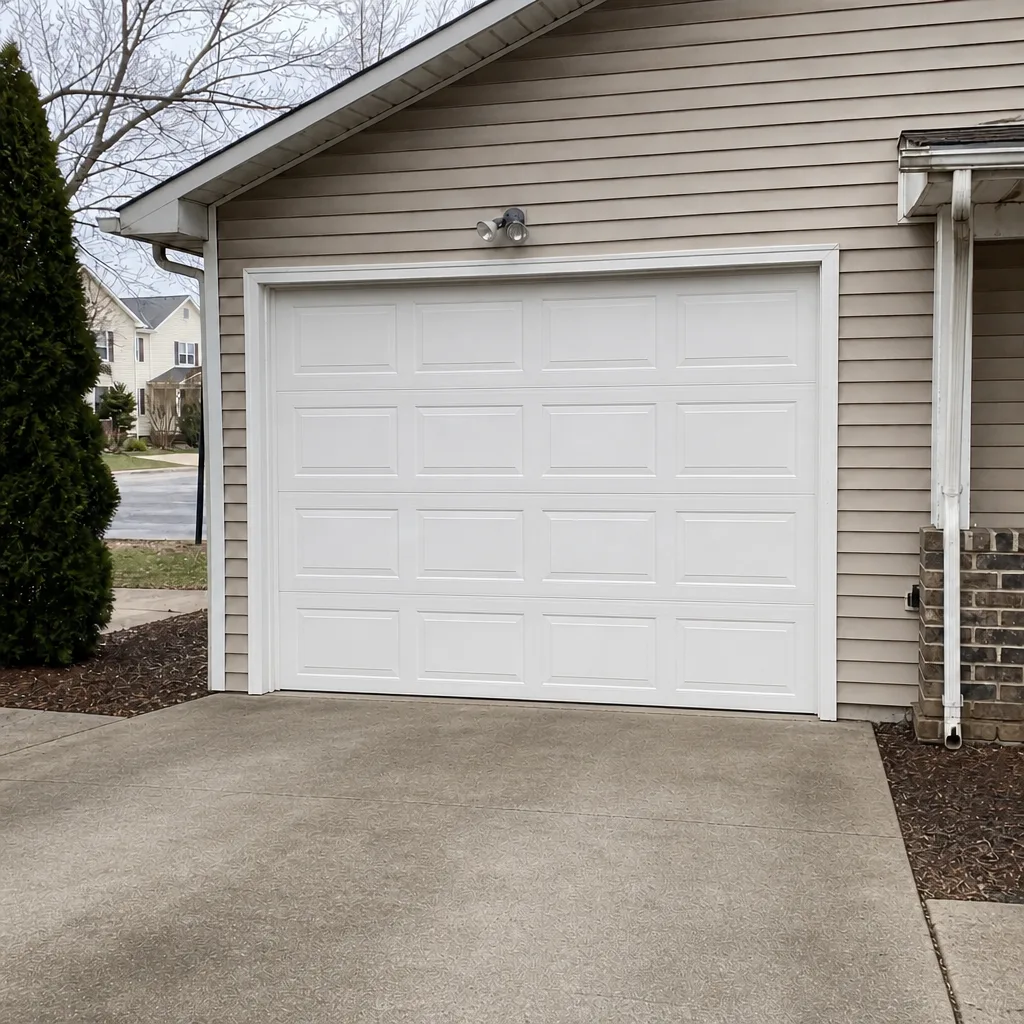 After
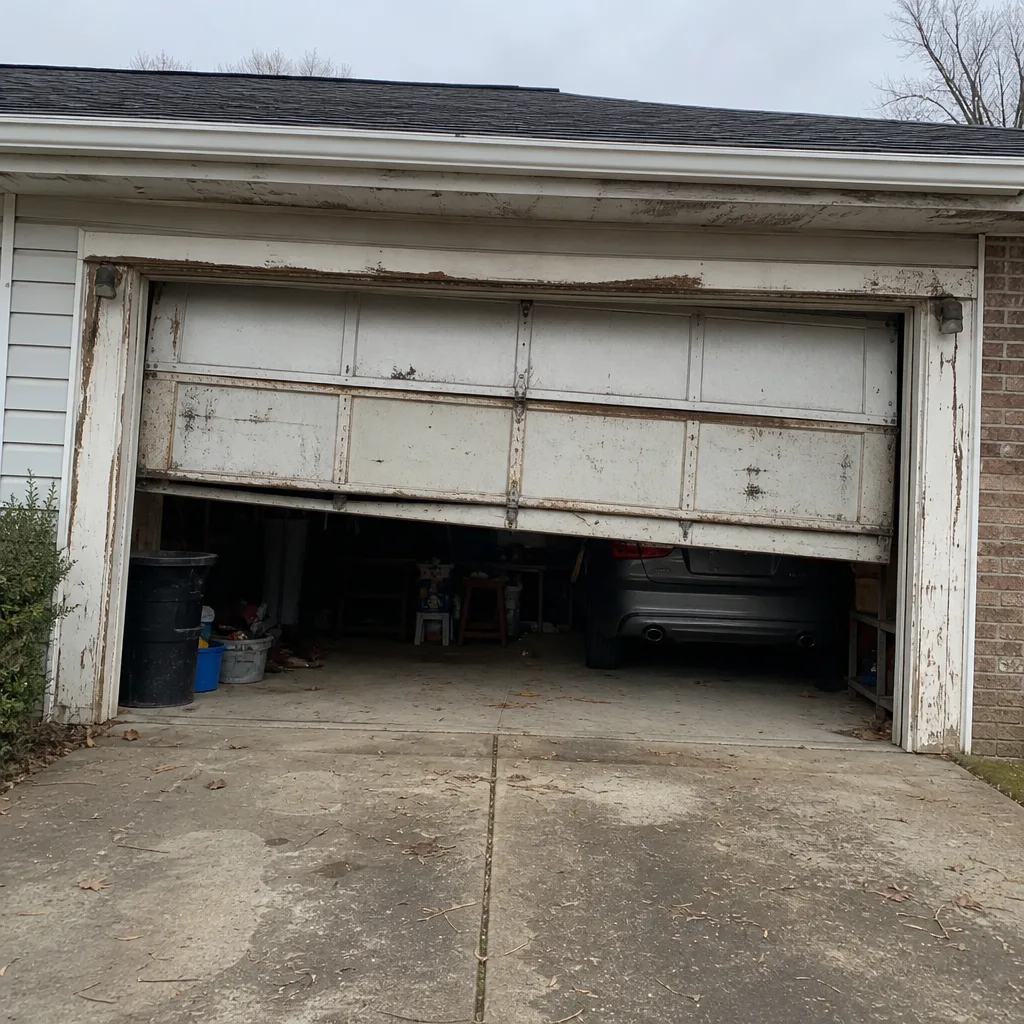 Before
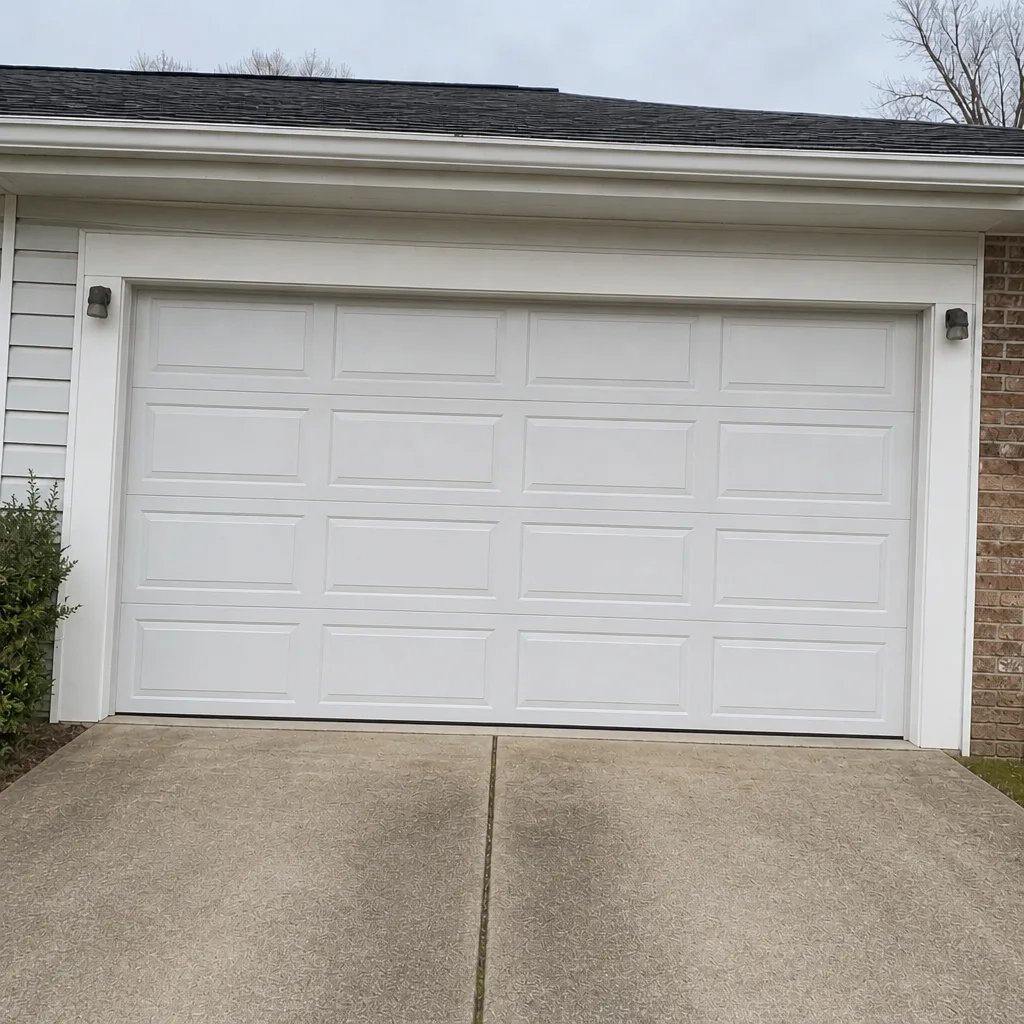 After
When to Call a Professional
Call a professional when the warning sign involves a spring or a cable, when the door falls or won’t stay up on its own, when the safety reversal fails, or when the door comes off its track. Those are the cases where a wrong move can hurt someone or worsen the damage. Call when the opener stalls, strains, or reports a code you can’t place, and call when the balance test keeps failing after a simple adjustment. For everyday concerns in Concord, Harbinger Garage Door Repair offers free estimates, and we can work with your insurer where that’s relevant. Call (866) 942-7643. We answer 24/7, with fast dispatch from 7am to 7pm. Every price is quoted and agreed before any work starts, so the written estimate is the final word.
Frequently Asked Questions
The first sign is usually a change in sound, most often a grinding or snapping noise during the last few inches of door travel. That sound points to a spring losing tension, even though it can seem to come from the opener. Schedule a look before the door stops lifting.
Yes, and it’s a stop-using-the-door problem. A visible gap means the spring has lost tension or broken, and the door can fall under its weight. Don’t operate it. A trained professional should handle the spring; never try to adjust it yourself. Call (866) 942-7643 for a diagnosis.
If the motor runs but the door strains, jerks, or lifts crooked, the door is usually the problem, not the opener. Disconnect the opener with the manual release and lift the door by hand: if it won’t stay put at halfway, the springs are tired. Opener faults show up as codes, clicks with no movement, or lost travel limits. Call (866) 942-7643 and we’ll help sort it.
A door used as the main household entry should get a balance and reversal check every season and a closer look each year. A high-cycle door wears its springs and rollers far faster than a low-use one, so catching a warning sign early in a busy Concord household pays off.
Yes, both are safe observation tests. Balance checks whether the door stays put at halfway; reversal checks whether it reverses on an object. Neither asks you to touch the springs, cables, or opener. If the reversal test fails, stop using the door and call a professional.
Yes. We service opener brands including LiftMaster, Chamberlain, Genie, and Craftsman, and door brands including Wayne Dalton, Raynor, Clopay, and Amarr. That means we arrive already familiar with your system. For garage door repair or opener work, call (866) 942-7643 for a free estimate.
The Bottom Line
Garage doors rarely fail without warning. They give you readable signals by component: a spring that grinds in the last few inches, a cable that frays, a roller that flat-spots, an opener that strains against a door gone heavy. Read those signals correctly and you act on a small repair instead of an emergency. Read them wrong, and you replace an opener that was never the problem. Run the balance and reversal tests, triage by urgency, and call when a spring or cable is involved. For a straight diagnosis and a free estimate in Concord, call (866) 942-7643. We answer 24/7, with fast dispatch from 7am to 7pm.
Contact
Harbinger Garage Door Repair services the full lifecycle of a garage door: repair when a warning sign shows up, opener repair when the motor is the problem, and installation when the door reaches end of life. We already know your system, so you get a straight diagnosis instead of a guess. Call (866) 942-7643 for a free estimate. We answer 24/7. Fast dispatch from 7am to 7pm, Sunday through Friday.
Written by the team at Harbinger Garage Door Repair.