
Last updated November 15, 2026
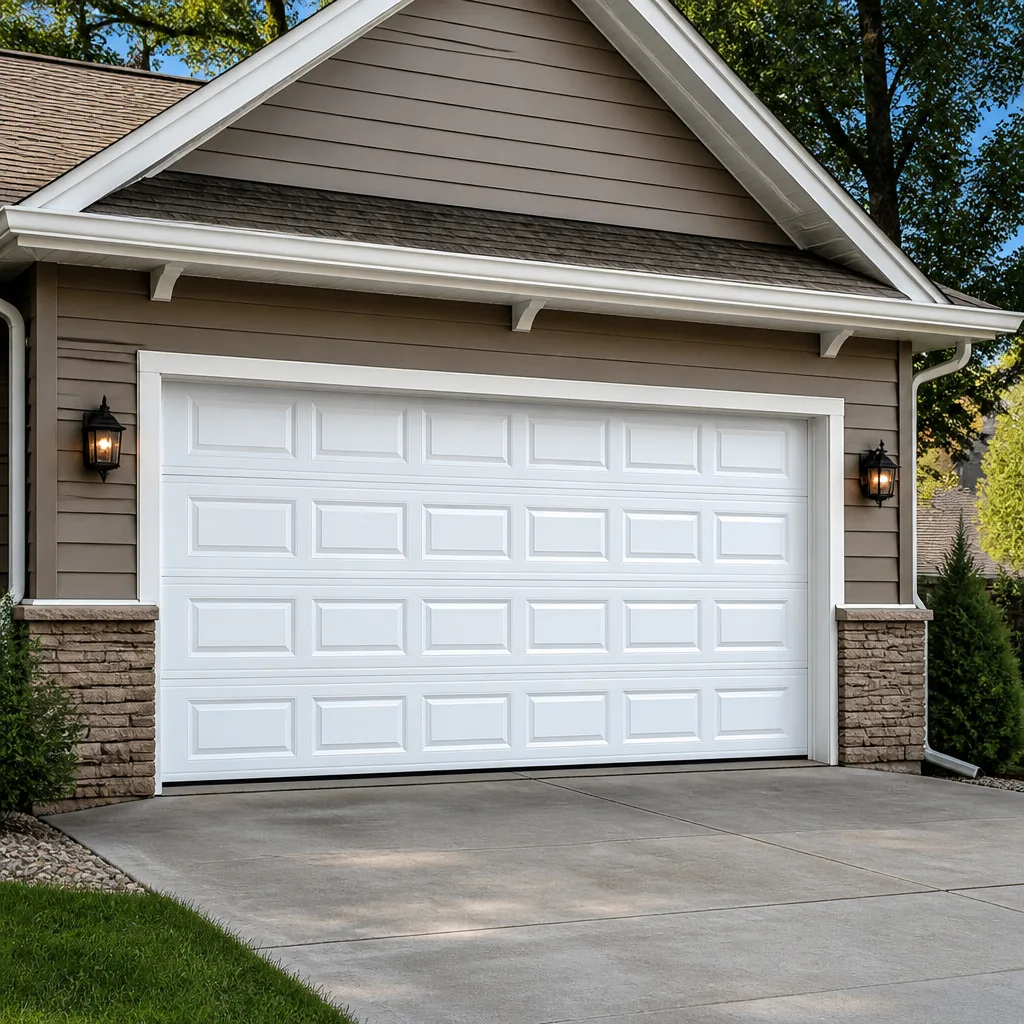 Raised-panel steel
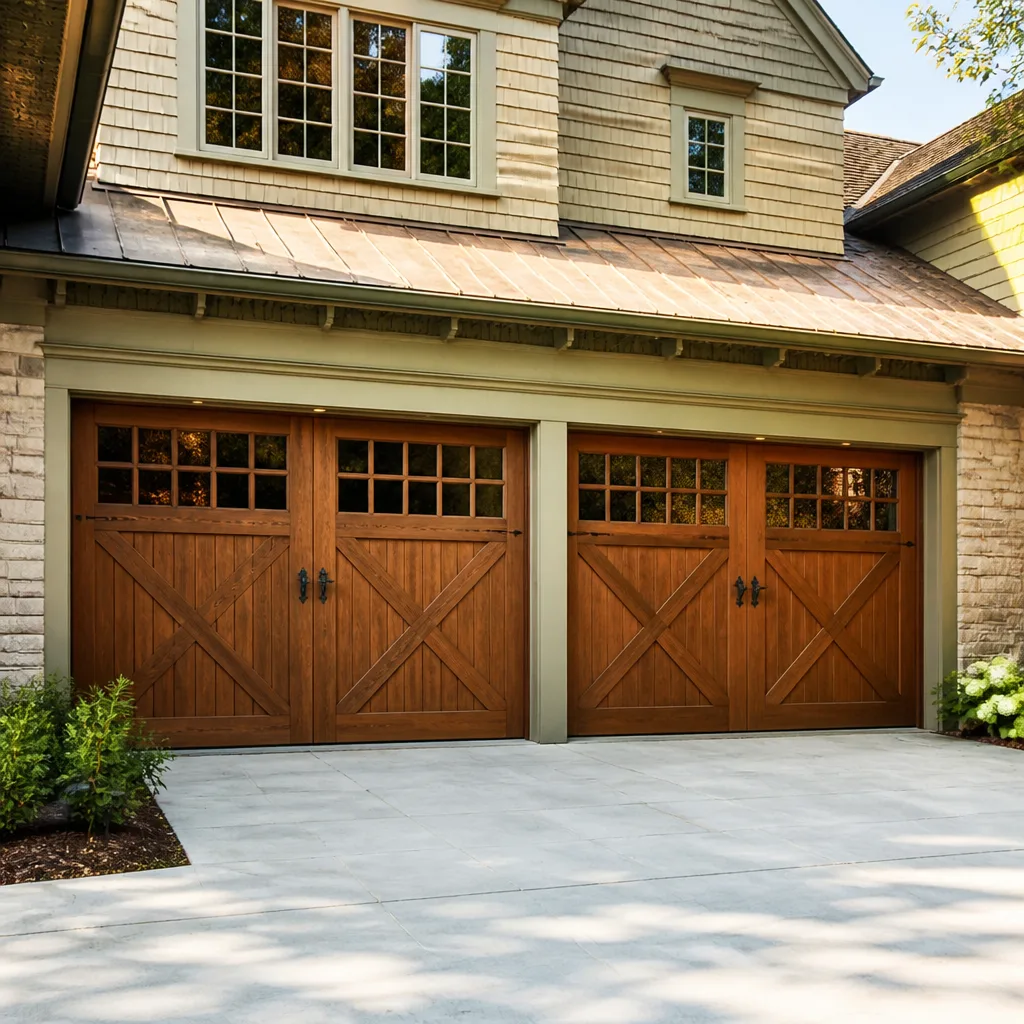 Carriage house
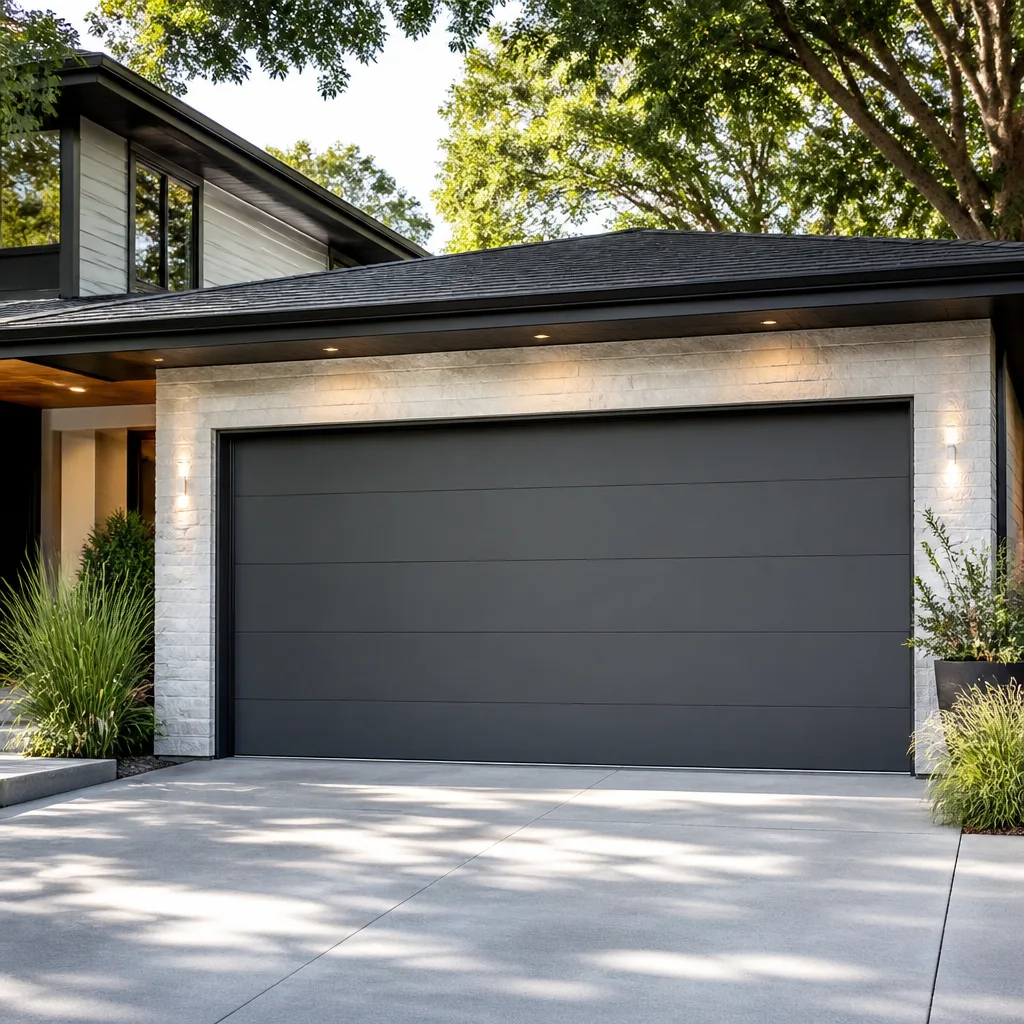 Modern flush
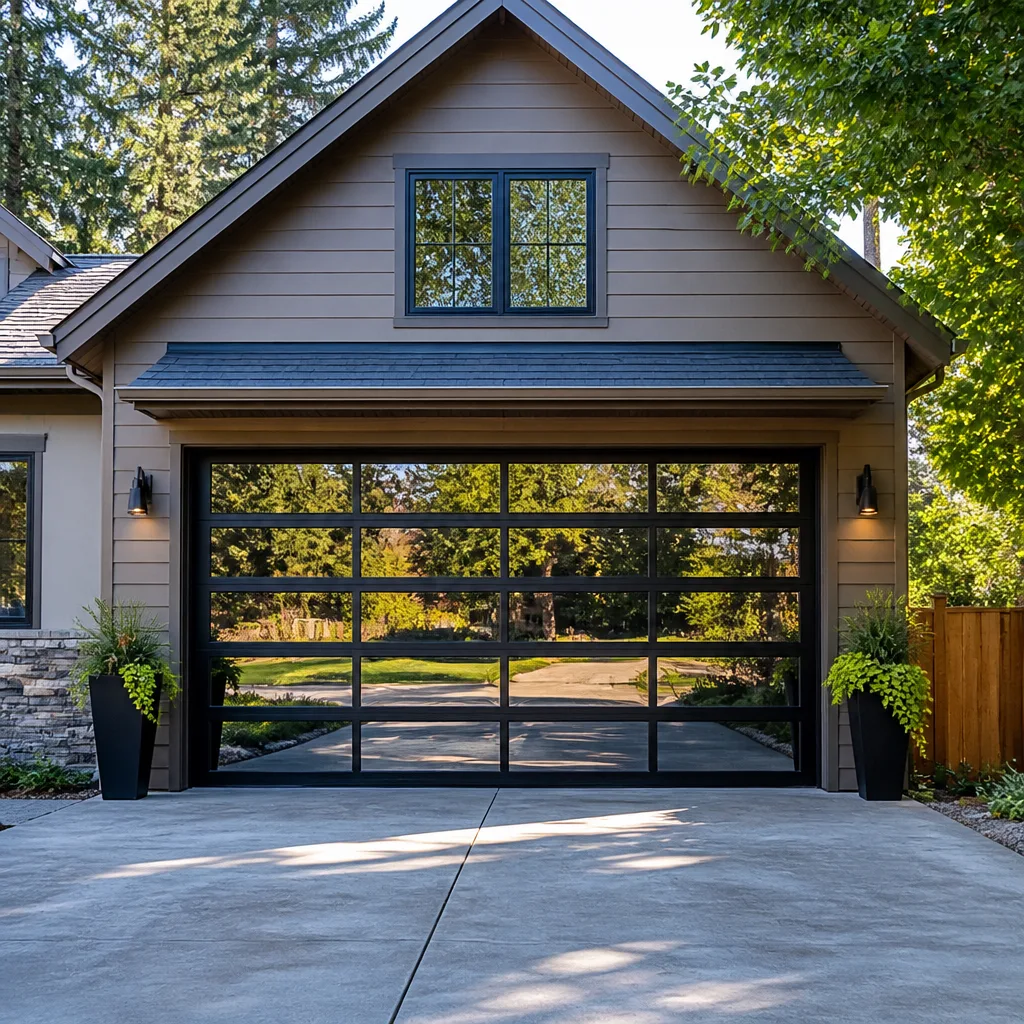 Full-view glass
 LiftMaster openers
 Chamberlain openers
Full 25-point door and opener safety check with every visit - springs, cables, rollers, tracks, and your LiftMaster or Chamberlain opener included
You get a price before we start. It does not change when the pro arrives.
Get your free estimateGarage Door Repair Troubleshooting in Concord: Common Problems and How to Fix Them
Most garage door problems announce themselves before they fail completely. A grind that wasn’t there last month. A door that reverses half a foot off the ground. A gap on one side when it closes. The trap Concord homeowners fall into is hearing one of these symptoms and guessing at a fix, because the wrong diagnosis costs more than the original problem. Adjust the spring tension chasing a misaligned safety sensor and you can snap a cable the same afternoon. This guide teaches you to read each sound and behavior, map it to the component actually responsible, and decide whether you’re ten minutes from a fix or a phone call away from one – before you touch anything.
Quick Answer
Garage door troubleshooting in Concord starts with matching the symptom to the system: grinding and screeching usually point to rollers, bearings or a dry torsion assembly, a door that reverses on contact usually means misaligned photo-eyes or a bad limit setting, and sagging or a visible cable kink means stop and call a technician. Roughly 40% of the repair calls we take turn out to be photo-eye alignment, a limit switch position or a lock-mode setting, all of which a homeowner can check safely in a few minutes. Anything involving torsion springs or frayed cables is a hard stop for do-it-yourself work.
Styles & brands we work with
- Raised-panel steel
- Carriage house
- Modern flush
- Full-view glass
- LiftMaster openers
- Chamberlain openers
Table of Contents
- The Six Failure Categories and Your Diagnostic Matrix
- Using the Manual Release to Isolate Opener vs. Door
- The Three Checks That Resolve 40% of Service Calls
- The Safety-Critical Line: Springs and Cables
- Brand-Specific Quirks in Concord’s Most Common Systems
- How Concord Climates and Housing Stock Affect Your Door
- Sound and Behavior to Component: The Full Map
- When a Symptom Means Stop, Not Fix
The Six Failure Categories and Your Diagnostic Matrix
Every garage door problem you’ll encounter falls into one of six mechanical categories. Identifying which one you’re dealing with determines whether the fix is a screwdriver adjustment or a service call. Work through them in order.
- Balance system – torsion springs, extension springs, cables and drums. Symptoms: the door feels impossibly heavy, one side sags, a cable looks kinked or frayed, or you heard a loud bang from the garage. This is the safety-critical category. No DIY.
- Track and alignment – the vertical and horizontal tracks that guide the door. Symptoms: the door binds partway up, a roller pops out of the track, or the door rubs against the frame on one side. Visual inspection is safe; bending a track back by hand is usually not.
- Rollers and hinges – the wheels and the pivoting plates that link the panels. Symptoms: grinding, squealing, or a door that shudders as it moves. Roller wear is the most common cause of noise in an aging door.
- Opener and drive – the motor, belt or chain, and the rail. Symptoms: the motor hums but the door doesn’t move, the door moves unevenly, or the opener struggles at the top of the cycle.
- Safety and control – photo-eyes, limit switches, force settings and lock mode. Symptoms: the door reverses on contact or reverses on its own, the remotes stop working, or the opener light flashes.
- Seals and structure – bottom weather seal, panel damage, hinges and carriage hardware. Symptoms: daylight under the closed door, a noisy slam on closing, or a panel that’s pulling away from its hinge.
In our experience, roughly half of the calls that come in are described as one category but turn out to be another. A homeowner reports “the opener is broken” when the real issue is a worn roller binding the door so heavily the motor trips its force limit. That’s why the manual release test, below, comes right after this matrix.
Using the Manual Release to Isolate Opener vs. Door
The single most useful test in garage door troubleshooting is also the simplest: pull the red manual release handle and operate the door by hand. That one action splits the entire universe of possible causes in two. If the door moves freely by hand, the door mechanism is healthy and the problem lives in the opener or its controls. If the door is heavy, binds, or won’t stay put when you let go, the problem lives in the door – and often in the balance system, which means you stop.
Here’s the sequence, and it takes about two minutes:
- Close the door fully. Pull the release cord hanging from the opener rail. Never pull it with the door open, because the door will drop.
- Lift the door with one hand. A properly balanced door requires little effort and stays wherever you leave it – halfway up, it should stay halfway up.
- If it won’t lift, lifts only with serious effort, or slams down when you release it, the balance system or a track is the problem. Stop and book a technician.
- If it moves easily and stays put, the door is fine. Reconnect the release and turn your attention to the opener and the safety controls.
- Reengage the release by running the opener until the carriage clicks back into the trolley. If it won’t catch, the door needs a manual nudge to meet the carriage at the right point.
This test also tells you what not to touch. A door that lifts easily isolates the problem to electronics and controls, which is where the three free checks live. A door that won’t lift is telling you the opposite: the opener may be perfectly healthy and just doing its job against a mechanism it can’t move. Many Concord garage door repairs we see get reported as opener failures when the door itself was the problem all along.
The Three Checks That Resolve 40% of Service Calls
Three specific conditions account for roughly 40% of the troubleshooting calls we handle, and all three are safe for a homeowner to check without tools. Run them before you call anyone. If one of them is your issue, the fix is minutes and costs nothing.
1. Photo-eye alignment
The two small sensors mounted on the frame at floor level, one on each side, send an invisible beam between them. If that beam is broken or the sensors are out of line, the door reverses or refuses to close – and it looks exactly like a major opener failure. Look at the small LED on each sensor (most brands show a lit indicator when aligned). If one is dark or blinking, the beam isn’t getting through. Check for dirt, a spider web, a sagging bracket, or something as simple as a trash can nudged a few inches into the beam’s path. Wipe the lenses and nudge the brackets back into line by hand. A steady indicator on both units means the photo-eyes are fine.
2. Limit switch position
The limit switches set how far the door travels up and down before the opener stops. When they drift, the door stops short of the floor or reverses just before closing. On most modern openers the adjustment is a pair of screws on the back or side of the unit labeled up and down. A small turn, a test cycle, and repeat until the door closes fully and stops cleanly against the floor – that’s the whole procedure. Chang
ing more than a quarter turn at a time usually overshoots, so go slowly. On a Craftsman or older LiftMaster unit, these screws are labeled clearly, and the door will tell you immediately whether you turned the right one.
3. Lock mode and vacation lock
Nearly every opener has a lock mode that disables the remotes, usually activated by holding the wall button for a few seconds or pressing a dedicated lock button. Its purpose is security, but it’s easy to trigger by accident while cleaning the wall panel or holding a button a beat too long. The symptom is maddening: the wall button works, the door operates, but no remote does. If your remotes stopped working at once and the wall switch still functions, look for a lock indicator on the wall console before assuming the remotes or the logic board are dead. Press and hold the lock button until the indicator changes state.
If all three checks pass and the door still misbehaves, you’ve narrowed the problem to component wear or a control-board fault, and it’s time to have garage door opener repair looked at by a technician who works on your opener’s brand every week. In Concord, those three checks are often the difference between a free afternoon fix and a service call.
The Safety-Critical Line: Springs and Cables
Torsion springs store enough energy to lift a door several hundred pounds, and when a spring or cable is under tension every component in that assembly is a hazard. This is where troubleshooting ends and a trained professional starts. We don’t give step-by-step instructions for working on springs or cables, because the failure mode isn’t “the door still doesn’t work” – it’s a serious injury. A real garage door specialist never invites a homeowner to adjust spring tension, cut a cable, or uncouple a drum.
Recognize the hard stops:
- A loud bang from the garage, followed by a door that won’t lift or sits heavy. That’s usually a broken torsion spring. Stop.
- A visible kink, fray or separation in either cable. Cables under load fail suddenly, not gradually. Do not cycle the door again.
- A door sagging on one side that was level a week ago. This points to a cable or drum slipping, and running the opener makes it worse.
- A garage door that won’t stay up when you let go during the manual release test. Spring tension has failed. The door can drop without warning.
In any of those cases, the right move is to leave the door exactly where it is and call. Disconnect the opener if you can reach the release safely, but don’t try to lower the door to the ground by force. A garage door that’s stuck in an open position is inconvenient; a garage door that comes down on a person is a different category of problem entirely. Every trained garage door technician treats this line as the trade’s first rule.
Brand-Specific Quirks in Concord’s Most Common Systems
The garage doors in Concord’s neighborhoods are dominated by a handful of brands, and each has quirks that produce false-positive symptoms. Knowing the brand of your opener and door saves a lot of wasted diagnosis, because a symptom that looks like one failure is often something specific to the platform.
LiftMaster and Chamberlain. These two share the same engineering heritage, and their openers introduce a class of “looks broken, isn’t” symptoms. A remote that suddenly stops working while the wall button still operates is almost always lock mode or a dead remote battery, not a logic-board failure. On the smart-platform units, a firmware update or a Wi-Fi reconnection can leave the app unable to command the door for a short window while the opener itself is healthy. And on units with a battery backup, a dying backup battery can produce brief interruptions during an otherwise normal cycle – easily misread as a mechanical fault. If you have a Chamberlain or LiftMaster system, run the three free checks above first; they resolve the majority of “my opener is broken” reports on these brands.
Craftsman. Older Craftsman systems are still on a lot of Concord garage ceilings, and their quirk is the way they fail. A Craftsman opener that has worn its plastic drive gear will often spin the motor audibly without moving the door – a sound that mimics a stripped chain or a broken carriage. On these units, the remote-receiver and the safety-reverse settings are the first things a service visit should confirm before anyone opens the housing. The brand matters because the parts needed and the repair path are different from what a newer smart-opener platform requires.
Raynor. Raynor doors show up frequently on homes built or updated with heavier panels, and their quirks tend to live in the door mechanism rather than the opener. A Raynor door that shudders on the way up is usually telling you about roller wear or a track that has shifted in its brackets – a mechanical issue that will eventually trip the opener’s force limit and look like an opener failure.
Part of what makes diagnosis accurate the first time is knowing the system before anyone arrives. That’s the reason Harbinger Garage Door Repair specializes in LiftMaster, Chamberlain, Genie, Clopay, Amarr, Wayne Dalton, Craftsman and Raynor, and handles both garage door repair and the opener repair that so often follows it. When you call, tell us the brand, and the likely cause is already on the list before we’re through the door.
How Concord Climates and Housing Stock Affect Your Door
Concord’s climate puts specific stress on garage doors and openers, and the region’s housing age adds a second layer to that. Understanding both narrows the diagnostic list.
Heat and humidity. A Piedmont North Carolina summer pushes the garage interior well above the ambient outdoor temperature, and that heat does three things to a door over time. It dries and thins the lubricant on rollers, hinges and the torsion tube, which is why grinding and squealing so often show up after a long hot stretch. It expands the wood or composite framing around the opening, which can cause a door to rub slightly on one side as the seasons turn. And it works on the seals, embrittling the bottom weather strip until it tears and lets daylight through. Lubrication is the cheapest heat-related fix, and it addresses more noise complaints than any repair part.
Freeze cycles and temperature swings. Concord gets cold snaps but also mild days in winter, and the repeated thaw-refreeze on a door that was fine in October can make a marginal spring fail all at once. If your door worked one morning in January and dropped the next, that’s the weather working on a spring that was already near the end of its cycle count, not a mysterious failure.
Housing age and opener generations. Concord spans newer subdivisions where the smart opener from day one is standard, and established neighborhoods where the original mechanical opener has been in place for a long time. A newer smart-platform system fails in one pattern – software, sensors, connection to the app. A legacy mechanical system fails in another – worn gears, sticky limit switches, a drive that finally gives up. Knowing which generation is in your garage tells you which half of this guide to read first.
None of this is specific to one building style or one street. What changes from home to home is the age of the system and how well it’s been maintained, and both are visible to anyone who knows what to look for.
Sound and Behavior to Component: The Full Map
This is the reference table to keep. Each row pairs the specific sound or behavior with the component most likely responsible and whether it’s a homeowner check or a technician call.
- Loud bang, door won’t lift: Broken torsion spring. Technician only.
- Grinding or squealing while moving: Worn rollers, dry hinges, or lack of lubrication on the torsion assembly. Check by observation; lubricate the moving parts you can reach safely, then assess.
- Door reverses immediately on contact with the floor or an object: Photo-eye misalignment or a force setting too low. Homeowner check.
- Door reverses on its own mid-travel: Force limit tripping, often due to a binding roller or track misalignment. Homeowner can observe; usually technician to repair.
- Motor hums but door doesn’t move: Stripped gear, broken chain or belt, or a disconnected carriage. Technician.
- Door works from the wall button but not the remote: Lock mode, dead remote battery, or a damaged receiver. Homeowner check.
- Sagging on one side: Cable, drum or spring failure. Hard stop, no DIY.
- Door stops short of the floor: Limit switch out of adjustment. Homeowner check.
- Daylight under the closed door or a slam on closing: Bottom seal worn or a hinge/panel issue. Homeowner can identify; repair depends on cause.
- Opener light flashing in a pattern: A diagnostic code – consult your model’s manual first, then a technician.
- Door binds partway up and shudders: Roller out of the track or a track that’s lost its shape. Technician.
- Frayed, kinked cable: Hard stop. Do not cycle the door.
Two entries on that list account for more technician visits than any others: rollers that have worn their bearings smooth, and photo-eyes nudged out of line. Reading the symptom against the component before you pick up the phone is the entire point of the matrix, because the same grind can come from a roller, a track or a dry spring assembly, and the fix is different in each case. If you’re reading this and the symptom isn’t on the list, the manual release test will narrow it down faster than any other single step.
When a Symptom Means Stop, Not Fix
Some symptoms are safe to troubleshoot and some are a signal to put the tools down. Knowing the difference is what separates a productive afternoon from a trip to the emergency room. The dividing line is whether the work puts any part of the door’s stored energy within reach of your hands.
Keep troubleshooting when: the issue is a limit switch or photo-eye setting; the door moves freely by hand and stops when you let go; the symptom is a remote not working; the door closes with a gap at the bottom; the only complaint is noise that lubrication might cure; or the opener hums and you’ve isolated the problem to the controls.
Stop and call when: you’ve heard a bang and the door won’t lift; you see a kinked or frayed cable; the door sags on one side; the door won’t stay up during a manual release test; a spring is visibly broken; a roller has popped off the track and the door is jammed; or a heavy door has dropped and you can’t identify why. In any of these cases, the repair requires the right tool for a torsion assembly and the experience to know how much load is on it. That’s not a reflection of your capability as a homeowner – it’s how the trade is structured, and any responsible technician will tell you the same thing. The same goes for the panel-and-structure category: if a heavy door has dropped and something looks tweaked at the hinges, the fix can involve alignment work that’s easy to make worse.
One exercise that saves time on the call: write down the brand and model of your opener (the label on the back or inside the light cover) and the brand of the door if you can find it on a panel edge. When the technician arrives already knowing the system, diagnosis is faster and the estimate is more accurate. That’s why Harbinger Garage Door Repair covers the eight most-installed brands and both opener generations rather than learning your system on the job.
Common Mistakes to Avoid
- Adjusting spring tension to fix a track or sensor problem. This is the classic misdiagnosis, and it’s how homeowners turn a simple photo-eye fix into a snapped cable. If the manual release test tells you the door moves freely, springs are not your problem – leave them alone.
- Cranking a limit switch a half turn at a time in one direction. It feels productive, but a limit adjustment that goes too far in either direction makes the opener drive against its own travel stop, which can strip a gear. Quarter turns, one test cycle each.
- Assuming a non-working remote means a dead opener. On a LiftMaster or Chamberlain system, lock mode or a dead remote battery explains the majority of remote-only failures in Concord. Check the wall console’s lock indicator before anything else.
- Lubricating a noisy door without first checking roller wear. Grease quiets the symptom for a week, but a roller with a failed bearing is still grinding its shaft. Find the worn part, then lubricate the healthy ones.
- Pulling the manual release with the door in the raised position. The door will drop. Always close it fully before releasing the carriage.
- Cycling a door that just made a loud bang. A broken spring leaves the door operating on one spring or none, and running the opener in that state puts the remaining hardware at risk. Stop after the first bang.
- Thinking a newer smart opener can’t have mechanical problems. A modern opener with a binding roller will trip its force limit every time, and the app will report a fault that lives in the door, not the electronics. Match the symptom to the component, not the age of the hardware.
See the difference
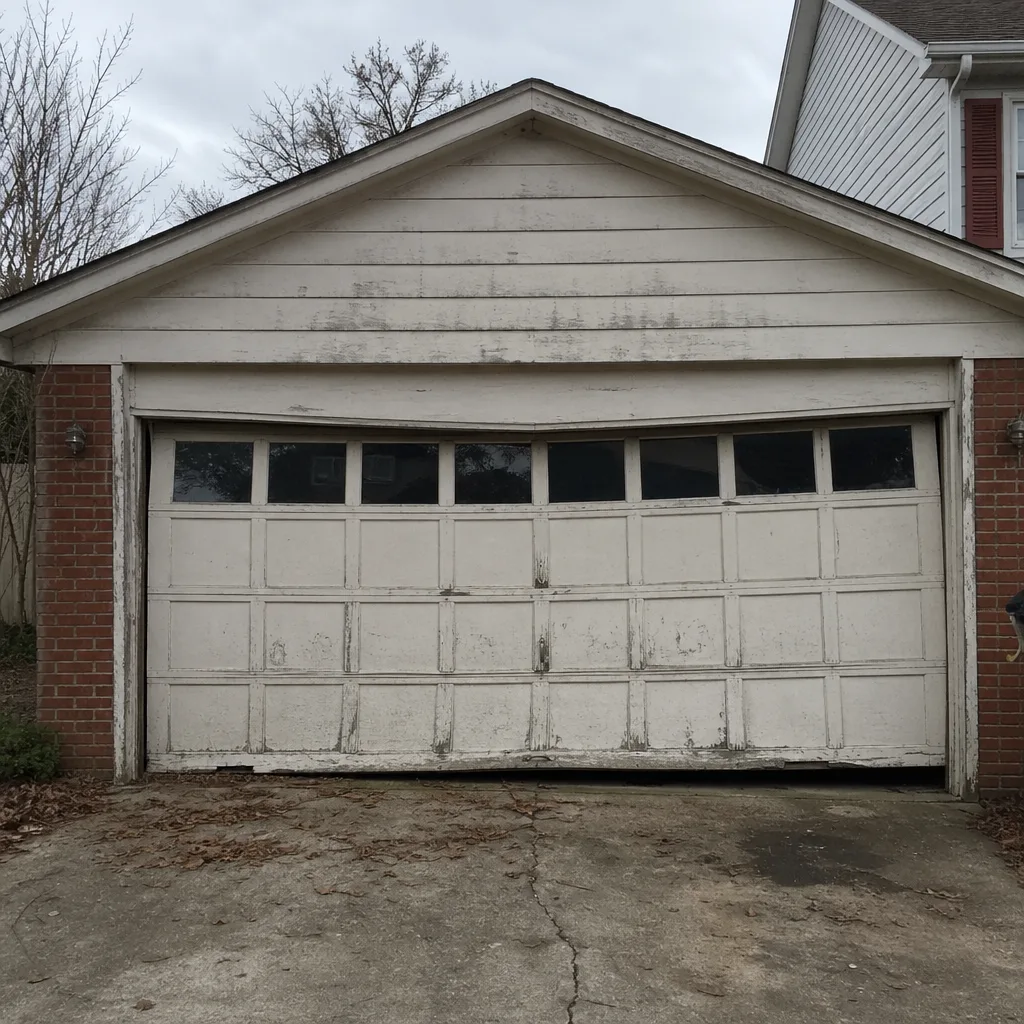 Before
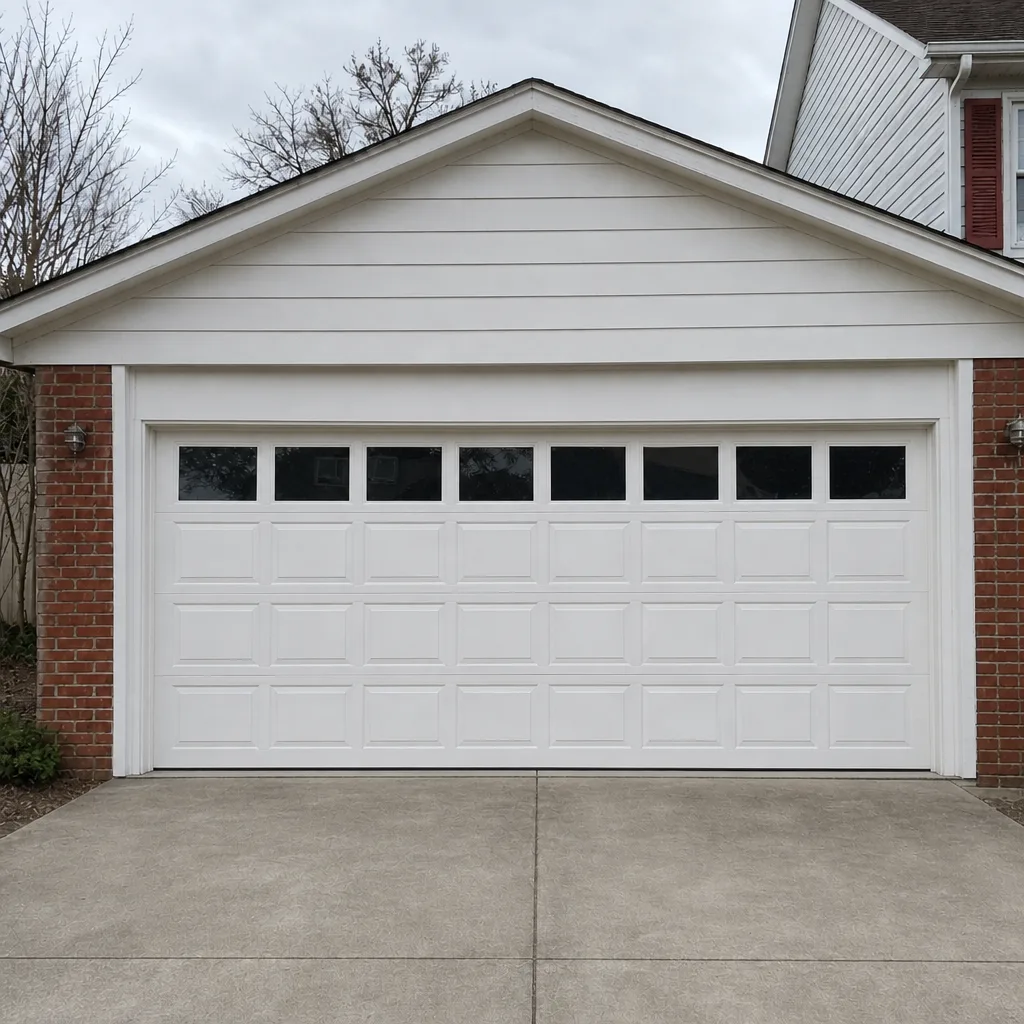 After
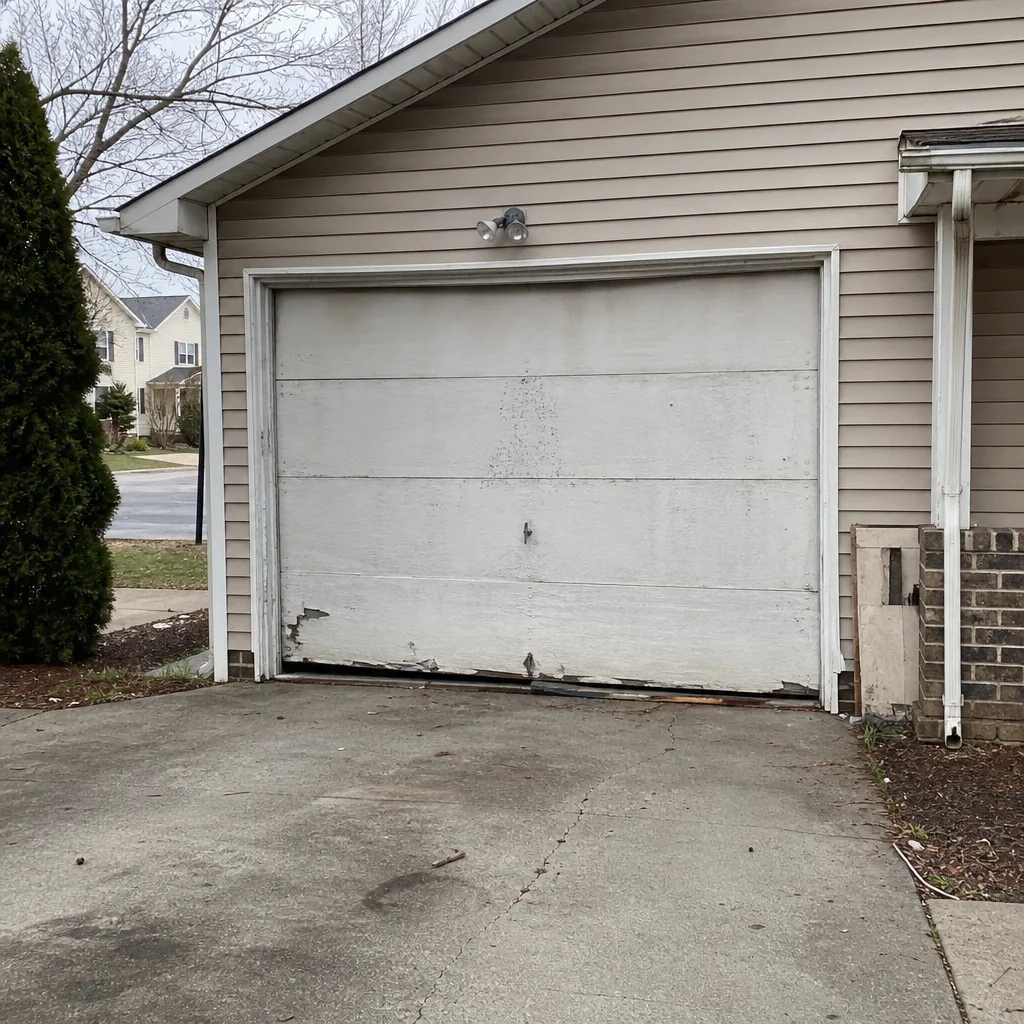 Before
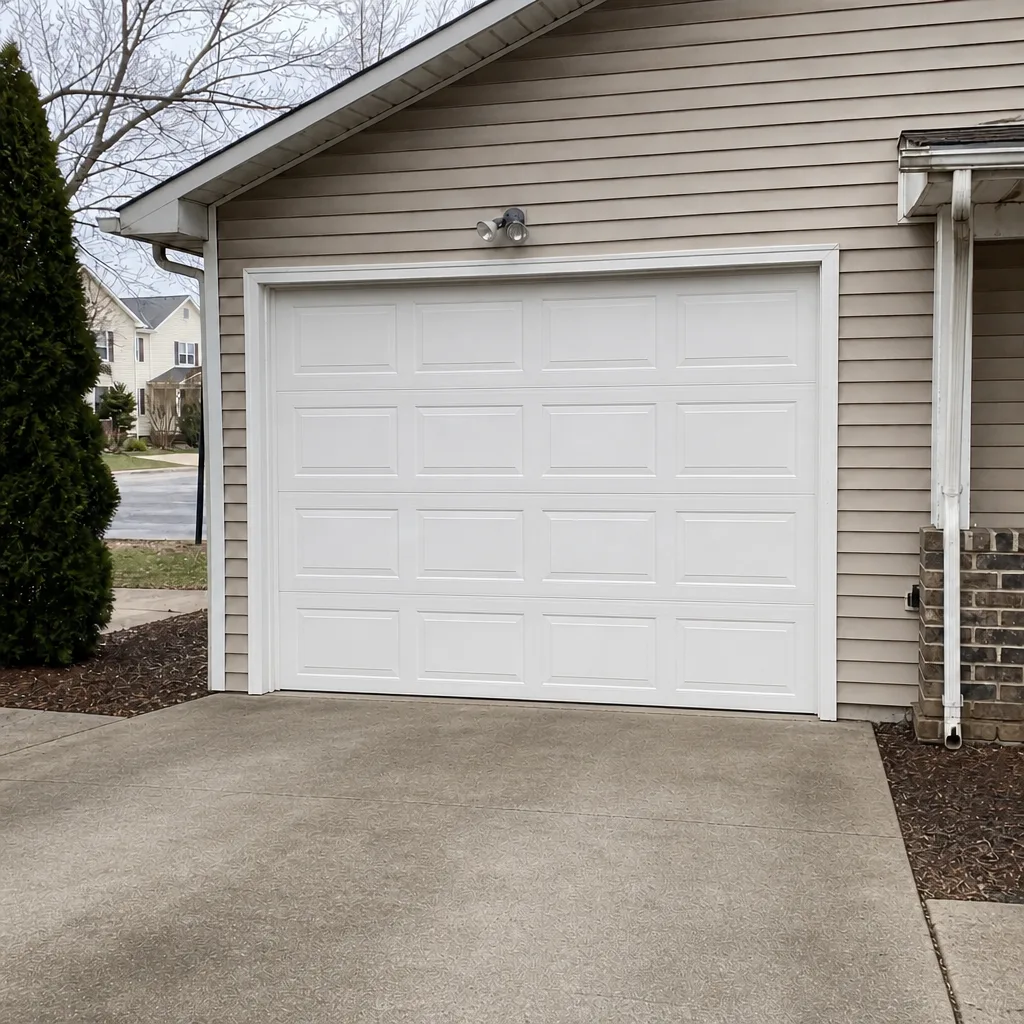 After
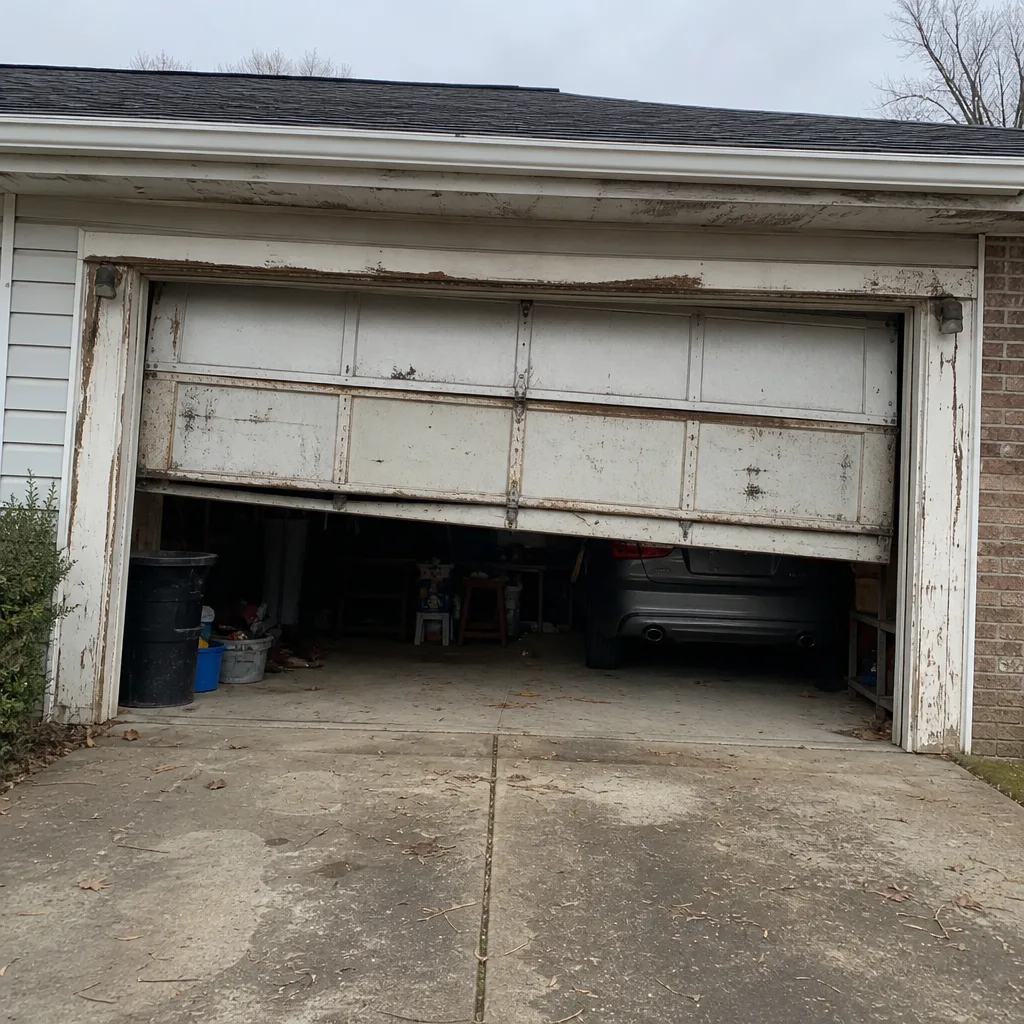 Before
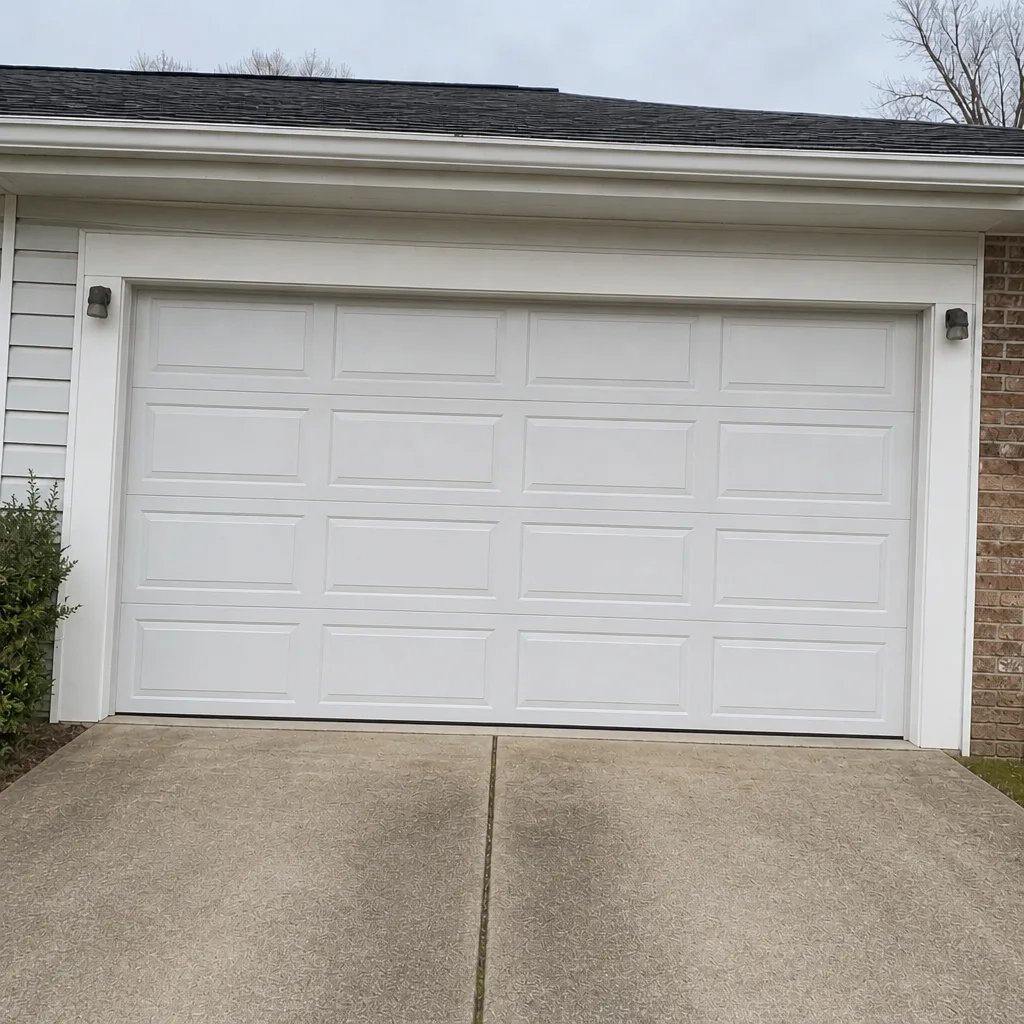 After
When to Call a Professional
Call a professional when your symptom falls in the stop category – a bang, a frayed cable, a door that sags or won’t stay up, a jammed roller, or a heavy door that dropped. Call when the three free checks don’t resolve the issue and you’ve narrowed the problem to component wear. Call when the door shudders or binds and you can’t see why. And call when the diagnosis is clear but the repair requires the door to be rebalanced, because that’s a job for someone who does it daily. Harbinger Garage Door Repair offers free estimates in Concord – call (866) 942-7643. We answer 24/7, with fast dispatch from 7am to 7pm, Sunday through Friday. The price is quoted and agreed before any work starts, so the number on the estimate is the number you’ll pay.
Frequently Asked Questions
Almost always the photo-eye alignment or a force setting that’s too low. Look at the two small sensors at floor level on either side of the door: both should show a steady indicator light. Wipe the lenses, check that nothing is in the beam’s path, and nudge the brackets back into line. If the indicators are steady and the door still reverses, a limit or force setting needs adjusting. Call (866) 942-7643 for an exact quote if the checks don’t resolve it – estimates are free.
Yes, a loud bang followed by a door that won’t lift is the classic sign of a broken torsion spring. Do not run the opener again, and do not try to adjust or replace the spring yourself. This is a hard stop for DIY work and requires a trained technician. Call (866) 942-7643 and we’ll schedule a visit – the estimate is free and the price is agreed before any work starts.
No. That pattern usually points to lock mode being activated, a dead remote battery, or a damaged receiver – not a failed opener. Check the wall console for a lock indicator and hold the lock button until the state changes. If a new battery in one remote and a lock-mode reset don’t fix it on a Chamberlain or LiftMaster, the receiver or logic board needs a look. Call (866) 942-7643 to book a diagnostic – estimates are free.
Yes, for the safe categories: photo-eye alignment, limit switch adjustment, lock mode, remote batteries, and routine lubrication. Roughly 40% of the calls we take resolve at one of those checks. Anything involving torsion springs or cables is off-limits for homeowners, because the stored energy in a torsion assembly can cause serious injury. If you’re unsure which category you’re in, the manual release test will tell you – and calling for advice costs nothing.
It depends on the component, the brand and the age of the system, so pricing is set per job by a written estimate rather than a flat rate. A photo-eye or limit adjustment is the low end, a roller or hinge replacement sits in the middle, and spring or cable work runs higher because of the safety-critical nature of the job. Call (866) 942-7643 for an exact quote – estimates are free and the price is agreed before any work begins.
No – the written estimate is the price, and it’s quoted and agreed before any work starts. If the technician finds a second issue during the visit, it’s priced separately and you approve it before anything moves forward. The estimate is free, and there’s no service-call fee or trip charge added on top. Call (866) 942-7643 to schedule a visit in Concord.
The Bottom Line
Most garage door failures are diagnosable before anyone touches a tool, and the homeowner’s job is to make one accurate call: which of the six categories am I in? The manual release test splits it in half in two minutes. The three free checks – photo-eye alignment, limit switch position and lock mode – resolve about 40% of the calls we take at zero cost. Anything involving torsion springs, frayed cables or a door that sags belongs to a technician, and stopping early is the correct answer, not the cautious one. Our technicians have up to experience across LiftMaster, Chamberlain, Craftsman and Raynor systems, and diagnosis is faster when the brand is known before arrival.
If your troubleshooting has narrowed the problem to a repair rather than an adjustment, call (866) 942-7643 for a free estimate. We answer 24/7, with fast dispatch from 7am to 7pm, Sunday through Friday. Every price is quoted and agreed before work starts – from a broken spring today to a full installation when you’re ready, we handle the whole job under one specialty.
Written by the team at Harbinger Garage Door Repair.